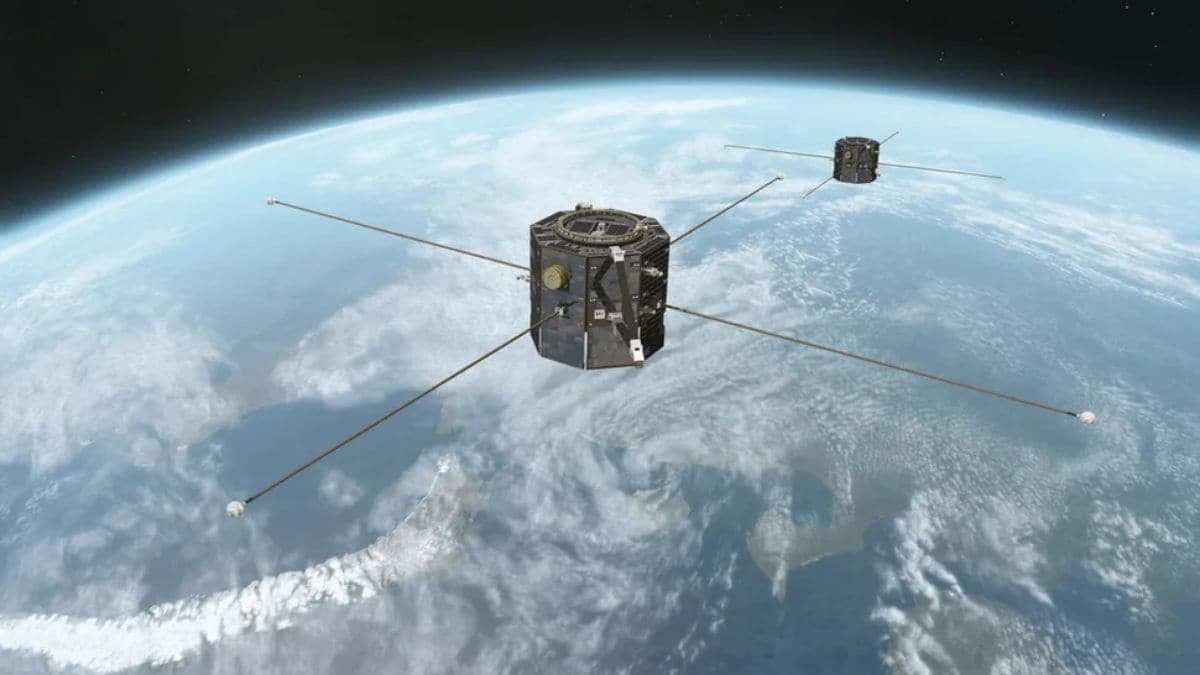
Two NASA satellites are scheduled to be launched into low-Earth orbit in a mission designed to do nothing lower than examine magnetic storms that imperil the Earth’s environment, communication, and orbital methods. Travelling collectively in sun-synchronous orbit, the Tandem Reconnection and Cusp Electrodynamics Reconnaissance Satellites (TRACERS) will preserve watch over Earth’s polar cusps — a pair of funnel-shaped areas in Earth’s magnetosphere the place photo voltaic particles and power circulation in. By observing these areas, TRACERS will proceed to learn the way magnetic reconnection works all through area, powering the large explosions on the solar in addition to the photo voltaic wind that spreads all through the photo voltaic system, resulting in area climate.
NASA’s $170M TRACERS Mission to Track Solar Wind and Shield Earth from Space Weather Threats
As per NASA’s briefing, TRACERS will discover how photo voltaic wind triggers disruptions in Earth’s magnetic subject, serving to researchers higher predict when and the place such exercise may happen. The spacecraft will fly carefully behind each other, permitting for almost real-time comparability of plasma and magnetic circumstances—an enchancment over earlier single-satellite research. Joe Westlake, NASA’s Heliophysics Division Director, acknowledged the mission will assist defend GPS, energy grids, and astronauts by enabling earlier forecasts of photo voltaic storm exercise.
The mission tackles a serious problem in heliophysics, our understanding of dynamic magnetic reconnection phenomena that modify on brief timescales. TRACERS twin strategy additionally allows scientists to discern between environmental shifts because of the travelling stars or to inherent magnetic variations. “These findings are crucial for basic studies of how the Earth’s magnetosphere interacts with solar energy,” mentioned principal investigator David Miles.
TRACERS, a spacecraft situated 590 kilometers above Earth, will collaborate with different missions to look at the Sun-Earth connection from varied vantage factors, offering distinctive low-orbit information to enrich broader heliophysics observations.
The $170 million TRACERS mission, set to launch later in July, has been created to bolster readiness for such photo voltaic climate and preserve space-dependent fashionable societies resilient and secure in a space-dependent world.