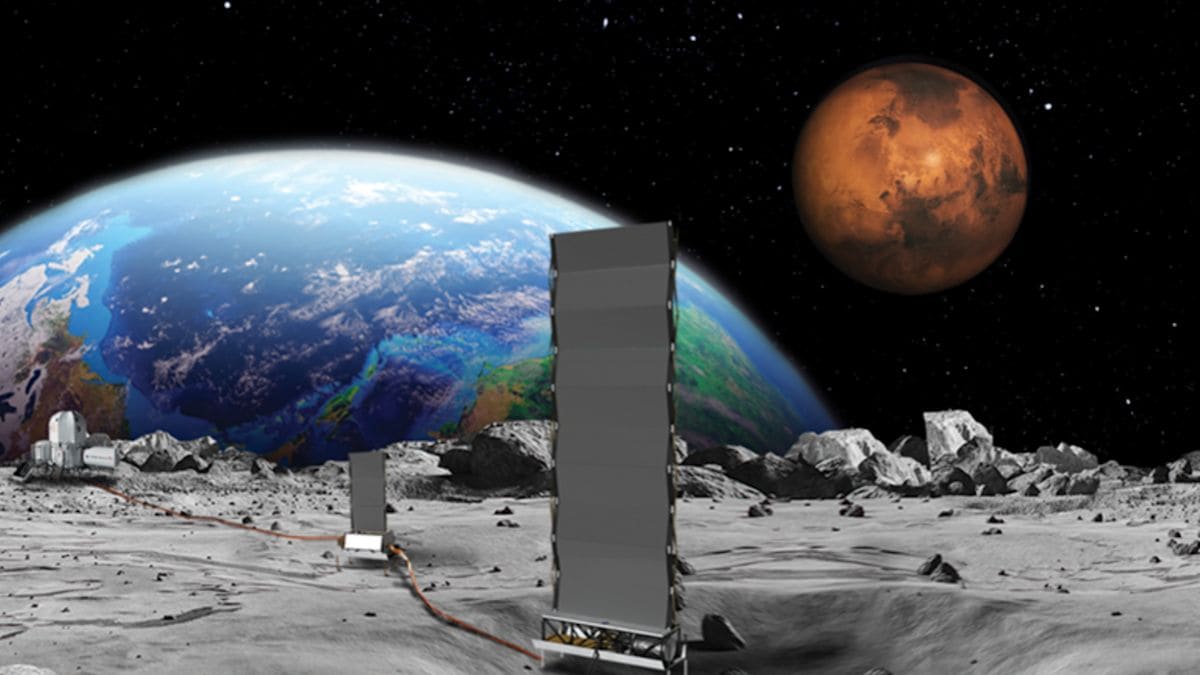
NASA’s interim chief Sean Duffy just lately declared the U.S. house company goals to put a 100-kilowatt nuclear reactor on the Moon by 2030 to offer vitality for an eventual lunar outpost. Duffy describes this as a brand new moon race to determine the strategic foothold and hold a aggressive benefit for the U.S. During a press convention titled “Unleashing American Drone Dominance” , he emphasised the significance of getting reliable energy on the lunar floor. NASA moved up its new crew-rushed lunar lander by a full 12 months because the company scrambles to grab key assets on the moon and lay the groundwork for deeper exploration at the least 4 years away.
According to the press convention, for exploration and a long-term Moon base, dependable energy is essential. Solar panels fail through the Moon’s two-week-long nights, so a nuclear reactor may provide steady electrical energy even in darkness. It can be particularly invaluable on the south pole, the place everlasting shadows cover water-ice deposits. These ice reserves are important for all times assist and gas, so regular energy there would broaden mission capabilities. Strategically, deploying a reactor would assist safe key territory.
China and Russia plan to construct one by the mid-2030s, and U.S. officers warn the primary nation to take action may successfully declare that area, making a de facto “keep-out zone”. Duffy even known as the south pole the Moon’s “best” spot—wealthy in ice and daylight—and mentioned America should “get there first and claim that for America”.
Challenges
The directive units near-term milestones. NASA should appoint a lunar reactor program supervisor inside 30 days and solicit business proposals inside 60 days. The purpose is a flight-ready 100 kW reactor by roughly 2030.
However, the plan faces main hurdles. The 2026 funds would allocate about $350 million to jump-start lunar fission energy (rising to $500 M by 2027), but additionally proposes deep cuts to general NASA funding. Observers observe this is able to be NASA’s smallest funds in a long time. Meanwhile, the company is trimming science applications and even its workforce.