The Southeastern Conference stated Monday that athletes who depart school, signal skilled contracts and compete professionally shouldn’t be permitted to return to varsity competitors, issuing the assertion as LSU strikes so as to add gamers who not too long ago entered skilled sports activities.
The SEC presidents and chancellors issued the assertion after a Monday night videoconference. In its assertion posted on X, the convention stated people who depart school athletics, signal skilled taking part in contracts and compete professionally “should not then be permitted to return to college competition.”
The SEC stated permitting former professionals to return would blur the road between school {and professional} sports activities, create important competitive-equity issues and cut back alternatives for highschool and present school athletes. The convention additionally known as for Congress to advance the Protect College Sports Act.
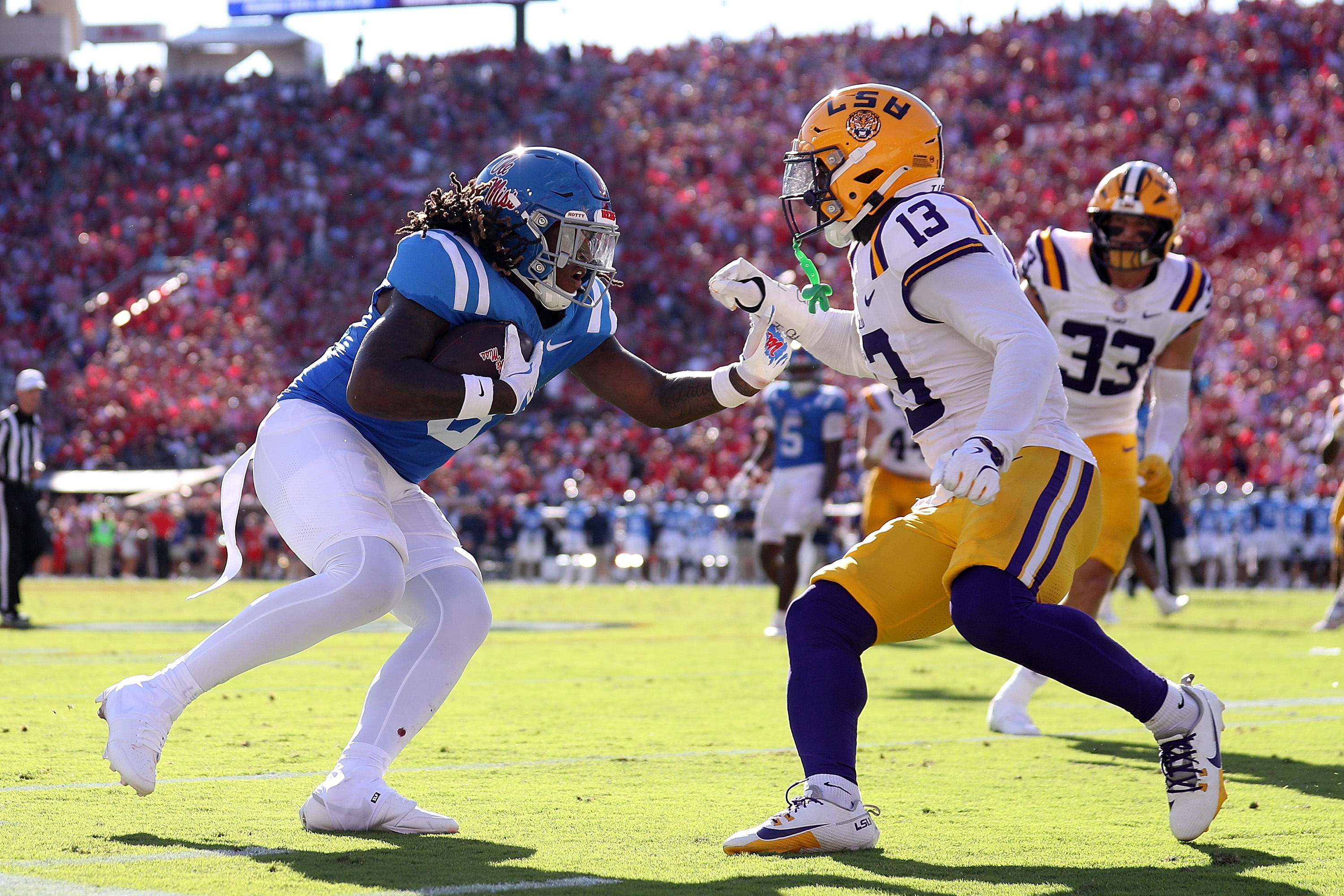
The assertion got here as LSU soccer coach Lane Kiffin pursued former Ole Miss gamers Dae’Quan Wright and Zxavian Harris. Wright was waived by the Cleveland Browns on Monday and, if he clears waivers, plans to hitch LSU, in line with his agent, Drew Rosenhaus. Harris is also headed to LSU after being waived by the New Orleans Saints, in line with Reuters.
LSU’s soccer additions
Wright is probably the most uncommon case.
The former Ole Miss tight finish signed with the Philadelphia Eagles as an undrafted rookie after the 2026 NFL draft. Philadelphia launched him Aug. 11, and the Browns subsequently signed him. Wright didn’t play in Cleveland’s two preseason video games. If he joins LSU after clearing waivers, he’s believed to be the primary participant to return to varsity after taking part in within the NFL, in line with The Associated Press.
Wright was amongst a gaggle of gamers who sued in Louisiana over an NCAA eligibility rule. A choose granted the gamers a further 12 months of eligibility and ordered the soccer switch portal reopened for them for one week. AP reported that the rule didn’t grandfather in gamers who graduated highschool in 2022.
Harris additionally performed at Ole Miss earlier than signing with the Saints as an undrafted free agent following the 2026 NFL draft. He was subsequently waived and introduced his intention to hitch LSU. Reuters reported that each Wright and Harris acquired eligibility aid via the Louisiana litigation.
Kiffin defended LSU’s pursuit of the gamers at a Monday information convention. He stated the gamers lined by the lawsuit can be found to recruit and that LSU, “like many places around the country,” is recruiting them. He additionally stated that not recruiting them might lead to LSU ultimately taking part in in opposition to them. Those feedback have been reported by The Associated Press.
Kiffin additionally described the present recruitment of NFL rookies as a “totally unique circumstance” ensuing from the courtroom ruling and the broader eligibility litigation, in line with AP.
R.J. Luis provides a separate LSU case
The SEC assertion additionally got here the identical day a Louisiana choose granted R.J. Luis Jr. a preliminary injunction permitting the previous St. John’s basketball participant to compete for LSU throughout the 2026-27 season.
According to ESPN’s report on the ruling, Luis entered the 2025 NBA draft, went undrafted and subsequently signed skilled contracts with the Utah Jazz and Boston Celtics. He didn’t play in an NBA regular-season recreation.
Luis’ case is separate from the soccer eligibility litigation involving the 2022 recruiting class. His case as a substitute issues whether or not signing NBA contracts after leaving school prevents him from returning to varsity competitors.
After a five-hour listening to Monday, East Baton Rouge Parish District Judge Ronald R. Johnson granted Luis’ request for a preliminary injunction in opposition to the NCAA, permitting him to start training and probably play for LSU this season.
Why the eligibility difficulty exists
The broader soccer dispute stems from modifications to the NCAA’s eligibility system.
The NCAA adopted a five-year eligibility mannequin that started making use of to athletes who graduated highschool in 2023. Athletes who graduated in 2022 weren’t grandfathered into the brand new system and, after exhausting their earlier eligibility, usually weren’t given the extra season.
Members of the 2022 class challenged that therapy in courtroom. The Louisiana case involving Wright and different soccer gamers resulted in a further 12 months of eligibility and a short lived reopening of the switch portal for the affected athletes.
The authorized state of affairs stays unsettled, with separate instances persevering with in federal and state courts. An appeals courtroom has additionally briefly blocked a broader ruling that may have offered further eligibility to hundreds of athletes.
That distinction is necessary to the SEC’s assertion. The convention is just not merely objecting to athletes receiving a further season. It particularly says athletes who depart school, signal skilled taking part in contracts and compete professionally mustn’t subsequently return to varsity competitors.
Sankey had already opposed the observe
Monday’s SEC assertion adopted an earlier effort by Commissioner Greg Sankey to oppose the return of a participant who had entered skilled sports activities.
Sankey filed an affidavit within the Luis case arguing that permitting former skilled athletes to return to varsity creates a “competitive disadvantage and fundamental unfairness” for athletes who remained within the school system, in line with ESPN’s report on the submitting.
Sankey additionally opposed an analogous eligibility state of affairs involving former Alabama basketball participant Charles Bediako throughout the 2025-26 season. A choose upheld the NCAA’s place in that case.
The SEC’s Monday assertion due to this fact formalized a place the convention had already introduced in courtroom: former skilled athletes who depart school and enter skilled sports activities mustn’t subsequently return to varsity competitors.
The SEC’s proposed resolution
The SEC stated the uncertainty over nationwide eligibility requirements demonstrates the necessity to advance the Protect College Sports Act.
The laws is meant to ascertain nationwide guidelines for school athletics, together with eligibility requirements, relatively than leaving these inquiries to a collection of courtroom instances and differing rulings.
For now, the SEC has publicly acknowledged that former skilled athletes mustn’t return to varsity competitors, whereas LSU is pursuing gamers whose eligibility has been affected by courtroom proceedings.
The eligibility instances stay ongoing as LSU prepares for the 2026-27 school sports activities seasons.
© Copyright 2026 Sports World News, All rights reserved. Do not reproduce with out permission.